
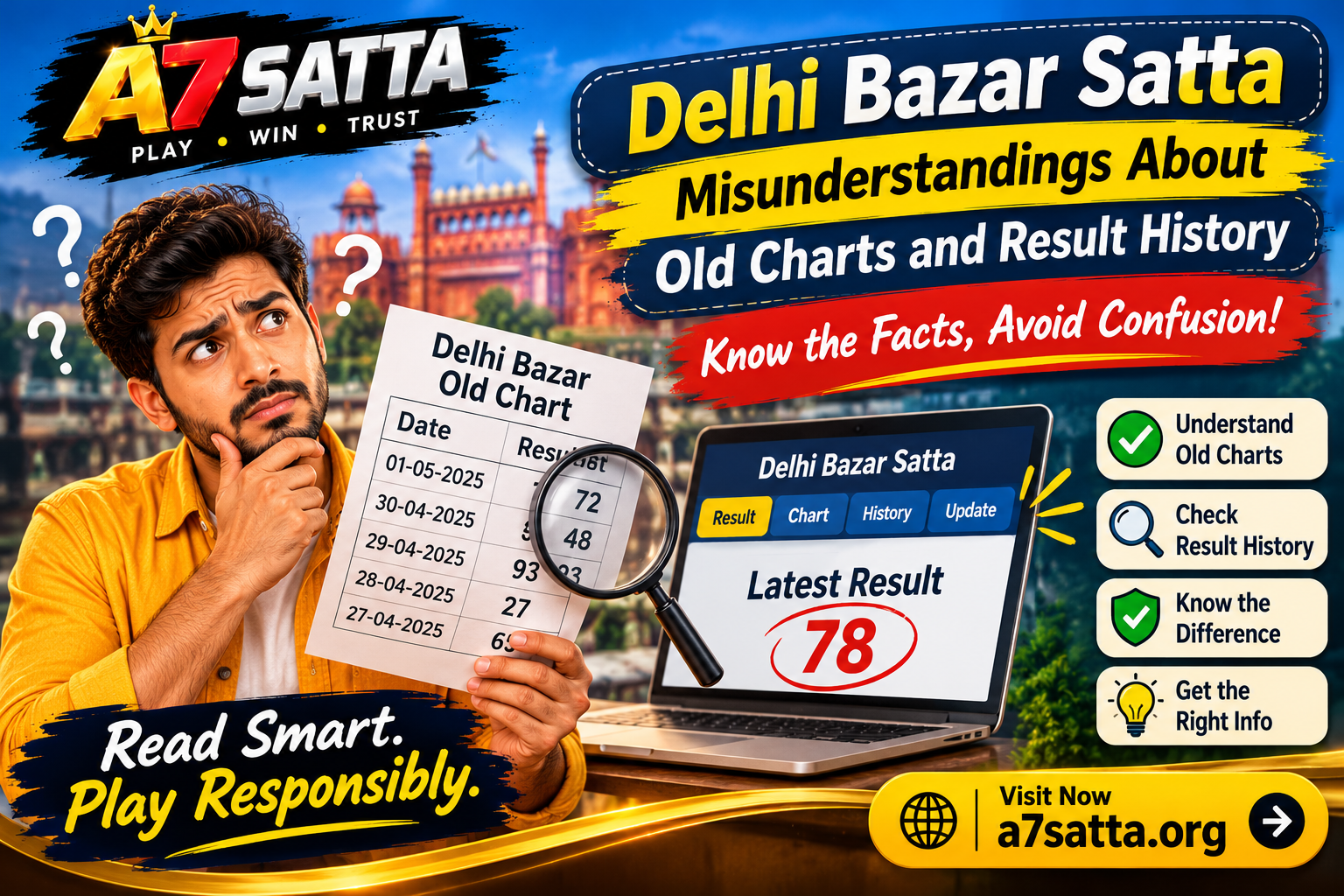
Delhi Bazar Satta is a term that many people search for when looking for market results, previous records and historical charts. Old charts can help visitors understand how past results are displayed and organised. However, there are several misunderstandings about what these records actually mean.
Some people treat historical results as a way to predict future outcomes, while others may confuse an old chart with the latest result. Understanding the difference between previous records, current updates and unverified information is important.
In this blog, we will discuss common misunderstandings about Delhi Bazar Satta old charts and result history, explain how to read historical records carefully, and highlight why past results should not be treated as a guarantee of future outcomes.
What Is Delhi Bazar Satta?
Delhi Bazar Satta is associated with a number-based betting market that people commonly search for online. Visitors may look for Delhi Bazar results, previous records, market updates and old result charts.
Historical charts generally display information from earlier dates. Depending on the website, these records may be organised by date, market or result number.
When visiting an A7 Satta information page, it is important to understand whether the displayed information relates to a previous result or a current update. Checking the date and market name can help avoid confusion.
Why Do People Search for Delhi Bazar Old Charts?
Old charts and result histories attract attention because they provide a record of previously displayed results. People may visit these pages for several reasons:
Historical information: Visitors want to see records from earlier dates.
Result comparison: Some users compare entries from different dates.
Record keeping: Historical charts provide an organised view of previously displayed information.
Understanding chart formats: New visitors may want to understand how dates and result entries are arranged.
Checking older information: Visitors sometimes return to a previous date to confirm what was displayed.
However, historical information should be understood as a record of the past, not as a reliable method of predicting future results.
Common Misunderstandings About Delhi Bazar Satta Old Charts
There are several misconceptions surrounding Delhi Bazar Satta result history. Understanding them can help visitors interpret online information more carefully.
1. Old Charts Can Predict Future Results
One common misunderstanding is that previous Delhi Bazar results can reveal what will happen in the future.
Historical charts only show information from earlier results. They do not establish a dependable pattern or guarantee a future outcome. Number-based games involve chance, and previous results cannot reliably determine what comes next.
2. Every Website Shows the Same Historical Records
Visitors sometimes assume that every website displays identical Delhi Bazar Satta history.
In reality, websites may organise, update or present historical information differently. Some pages may contain incomplete records, while others may display information without clear dates or source details.
It is sensible to check the date, market name and available context instead of assuming that every online chart is accurate.
3. An Old Chart Is the Same as a Latest Result
Another common mistake is confusing historical records with current result updates.
An old chart may contain entries from previous days or months. A latest result page, on the other hand, is intended to show a current update.
Always check the date displayed on a page before interpreting its information.
4. Repeated Numbers Mean a Certain Outcome Is Coming
Some visitors believe that repeated numbers in an old chart indicate that a particular number is more likely to appear again.
This assumption is not supported by historical records. Repetition in past results does not guarantee repetition in future outcomes. Each result should be understood independently rather than treated as a prediction.
5. Screenshots Are Always Reliable
Screenshots can be useful for keeping a visual record, but they do not automatically prove that the information is current or authentic.
A screenshot may be old, edited or missing important details. Checking the original page, date and market information is a better way to understand what is being displayed.
How to Read a Delhi Bazar Satta Historical Chart
Reading an old chart carefully can help visitors understand the information presented on a result-history page.
Check the Date
Start by checking the date associated with the result entry. This helps you understand which day the record belongs to and prevents confusion between older and newer information.
Confirm the Market Name
Make sure the chart is specifically labelled Delhi Bazar. Different markets may have separate result records, so the market name should not be overlooked.
Understand the Result Format
Websites may use different layouts to display historical entries. Take time to understand the headings, date columns and number format before interpreting the information.
Identify Historical and Current Information
Look for labels such as previous result, old chart, result history or latest update. These labels can help distinguish archived information from current updates.
Check Whether the Record Is Complete
Some historical pages may not contain every date or may have missing entries. Do not assume that an incomplete chart represents a complete result history.
Delhi Bazar Result History: What Can and Cannot Be Understood?
Historical information has a useful but limited purpose. It can help visitors review previously displayed records, understand a website's chart format and locate information associated with an earlier date.
However, it cannot reliably tell visitors which number will appear in a future result. It also cannot guarantee winnings or establish a sure-shot method.
A responsible approach is to treat Delhi Bazar Satta old charts as historical information only. Avoid making financial decisions based on number patterns, online claims or predictions presented without reliable evidence.
Difference Between Old Charts and Latest Delhi Bazar Results
Understanding the difference between historical charts and current updates is essential when browsing result-related websites.
Before relying on information displayed online, confirm that the page shows the correct market and date.
How to Avoid Confusion When Checking Delhi Bazar Satta History
A few simple habits can help visitors understand historical information more clearly:
Check the date before reading a result entry.
Confirm that the page refers to Delhi Bazar.
Distinguish between old charts and latest updates.
Avoid relying only on screenshots or forwarded messages.
Be cautious of websites claiming that past numbers guarantee future results.
Do not share personal or financial information with unverified websites.
Remember that historical results cannot guarantee winnings.
These steps can help visitors navigate result-history pages with greater awareness.
The Importance of Responsible Awareness
Satta-related activities involve financial risk and may be restricted or prohibited under applicable laws. Laws differ across Indian states, so visitors should understand the rules that apply in their location.
It is also important to remember that no old chart, result history or number pattern can remove the uncertainty involved in a game of chance.
Avoid risking money you cannot afford to lose, and do not treat online predictions as dependable financial guidance.
Final Thoughts: Understand Old Charts Before Relying on Them
Delhi Bazar Satta old charts and result history can help visitors review previously displayed information. However, misunderstanding historical records can lead to incorrect assumptions.
The most important thing is to distinguish between past results and current updates, check dates and market names carefully, and avoid treating repeated numbers as predictions.
A7 Satta visitors looking for Delhi Bazar information should approach historical charts with a clear understanding of their limitations. Past records describe what happened earlier; they do not guarantee what will happen next.
Frequently Asked Questions
1. What is a Delhi Bazar Satta old chart?
A Delhi Bazar Satta old chart is a historical record that displays previously listed results, usually organised by date. Visitors may use it to review earlier entries, understand chart formats and locate information from a particular date.
2. Can Delhi Bazar old charts predict future results?
No. Old charts only contain information about previous results. They cannot reliably predict future outcomes or guarantee a particular number. Historical patterns should not be treated as a dependable betting strategy or a way to ensure winnings.
3. How can I check Delhi Bazar result history?
Look for a result-history or old-chart section on the relevant website. Check the market name, date and displayed information carefully. Remember that online records may be incomplete or outdated, so do not assume every entry is verified.
4. Why do different websites show different Delhi Bazar results?
Different websites may organise or update historical information at different times. Some records may also be incomplete or outdated. Check the date, market name and original source details before accepting an online entry as accurate.
5. Are previous Delhi Bazar Satta results useful?
Previous results can help visitors review historical information and understand how records are displayed. However, they cannot establish a guaranteed pattern or predict future outcomes. Treat old charts as historical records rather than a method of making money.