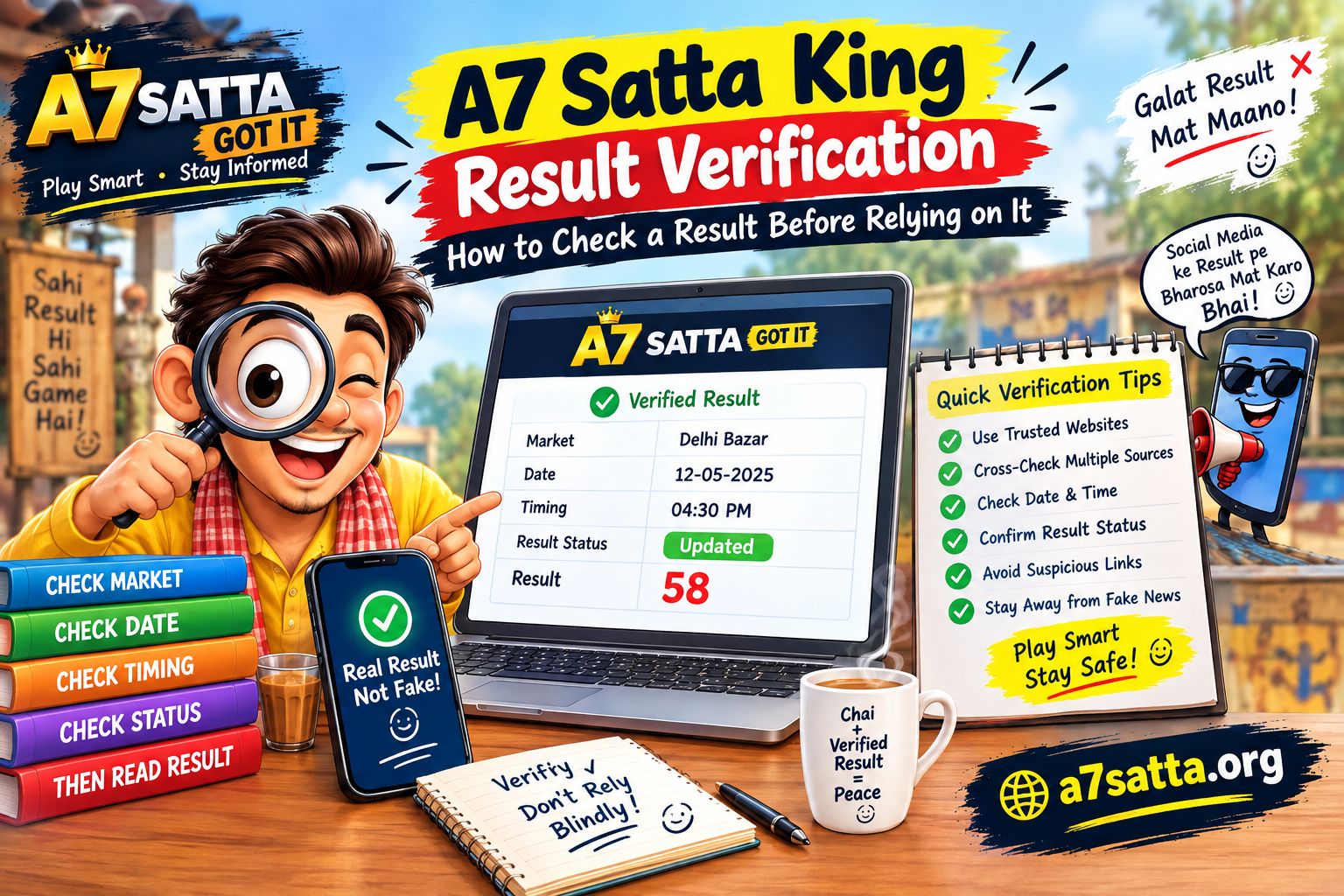


If you are new to A7 Satta, the result page may look confusing at first. You may see different market names, dates, timings and result updates on the same page. Knowing what each section means can help you find the information you are looking for without confusion.
A7 Satta provides result-related information in an organised format so visitors can check current and previous records. In this guide, we will explain how to read an A7 Satta result page, what the different details mean and how to check the correct market and date.
What Is an A7 Satta Result Page?
An A7 Satta result page is a page where result information is displayed according to the relevant market and date.
When checking an A7 Satta King result, it is important to look at more than just the number shown on the page. You should first check the market name, date and status of the result.
This simple check can help you avoid looking at an old result or information from a different market.
How to Check the Date on an A7 Satta Result
The date is one of the first things you should check.
Result pages can contain information for different days. If you are searching for an A7 Satta result today, make sure the date shown on the page matches the date you are looking for.
For older information, you may need to check the relevant historical or chart section.
Before reading any result, check:
Day and date
Month
Year
Whether the information is current or historical
This is especially useful when you are checking an old A7 Satta King result from a previous date.
Understanding Different A7 Satta Markets
Another important part of a result page is the market name.
A7 Satta-related searches can include different market names, and each market can have its own result information and timing. A visitor should therefore confirm the market before reading the result.
For example, users may search for information related to markets such as Delhi Bazar, Faridabad, Ghaziabad, Gali or Disawar.
Do not assume that a result shown for one market belongs to another market. Always check the market heading before using the information.
What Do A7 Satta Result Timings Mean?
Result timing tells you when information for a particular market is expected to be updated or published.
However, the displayed timing and the actual availability of an update may not always be the same. Updates can depend on the information being published and recorded.
If a result is not visible at the expected time, check the page again and confirm the date and market instead of assuming that an old result is the latest one.
The main details to check are:
Market name
Date
Expected timing
Result status
Latest update
Current Result and Previous Result: What Is the Difference?
A common mistake is confusing the current result with a previous result.
The current A7 Satta result relates to the latest available date, while a previous result belongs to an earlier date.
If you are checking historical information, the previous result may be useful. But if you are looking for the latest information, always check the date before reading the number.
A7 Satta users can also refer to historical charts when they want to review older records.
How to Read the Result Status
Result status is another useful part of the page.
Depending on the page, you may find information that is already updated, waiting for an update, or available as a historical record.
If a result has not been updated yet, it is better to wait for the information to be published rather than relying on an unverified number from another source.
A simple result-checking process is:
Check the market → Check the date → Check the timing → Check the status → Read the result.
This takes only a few seconds and can prevent common mistakes.
How to Find an A7 Satta King Result
If you are searching specifically for an A7 Satta King, first identify the exact market you want to check.
Next, look at the date and confirm that you are viewing the latest available information. If you are looking for an older record, use the relevant chart or historical-result section.
Avoid relying only on search snippets, screenshots or messages shared on social media. Open the relevant result page and check the complete information.
Why Historical A7 Satta Charts Are Useful
Historical charts can help users find older result records in one place.
Depending on the available chart, you may be able to look at information by day, month or year. This makes it easier to locate a particular date without searching through many separate pages.
However, historical results should be treated as records of previous results. Past results do not guarantee or establish future results.
This distinction is important when reading any A7 Satta chart.
Common Mistakes While Checking A7 Satta Results
Even a simple result page can cause confusion if you do not check the details carefully.
Some common mistakes include:
Checking the Wrong Date
A visitor may accidentally read yesterday's result while searching for today's information. Always check the complete date.
Checking the Wrong Market
Different market pages can have different names. Confirm the market before reading the result.
Relying on Old Screenshots
Screenshots shared elsewhere may not show the latest information. It is better to check the relevant page and its date.
Ignoring the Result Status
If a result is still waiting for an update, do not treat an earlier entry as the latest result.
A Simple Way to Check an A7 Satta Result
You do not need to spend a lot of time understanding a result page.
Just follow these steps:
Open the relevant A7 Satta result page.
Identify the market name.
Check the date.
Look at the listed timing.
Check whether the result has been updated.
Read the result shown for that market and date.
For older information, use the historical chart.
Following these steps makes the page easier to understand, especially for new visitors.
Why A7 Satta Keeps Result Information Organised
A clear result structure makes it easier for visitors to find information without going through unrelated pages.
When market names, dates and historical records are clearly separated, users can quickly understand what they are looking at.
For regular visitors, this can also make it easier to return to the same market or check an older record when needed.
Final Thoughts
Understanding an A7 Satta is mainly about checking the right details in the right order.
Always start with the market name and date. Then check the timing and result status before reading the information. If you are looking for an older A7 Satta King result, use the relevant historical chart rather than assuming that the latest page contains every previous record.
A7 Satta users can use this simple approach to navigate result information more clearly and avoid common date, market and update mistakes.
Frequently Asked Questions
1. What is an A7 Satta result page?
An A7 Satta result page displays result-related information according to a particular market and date. Before reading a result, check the market name, date and status to make sure you are viewing the correct information.
2. How can I check an A7 Satta King result?
First identify the relevant market and then check the date shown on the A7 Satta result page. Confirm the result status and latest update before reading the displayed result information.
3. What does A7 Satta result timing mean?
A7 Satta result timing refers to the expected timing associated with information for a particular market. If an update is not visible, check the page again and confirm the date and market before relying on the information.
4. Can I check old A7 Satta results?
Yes, historical result information can be organised through charts or previous-result sections. When checking an old record, select or confirm the correct date, month, year and market so that you do not confuse it with a current result.
5. Are previous A7 Satta results predictions for future results?
Previous results are historical records and should not be treated as guaranteed predictions of future outcomes. A historical chart can show what was recorded previously, but it cannot establish what a future result will be.